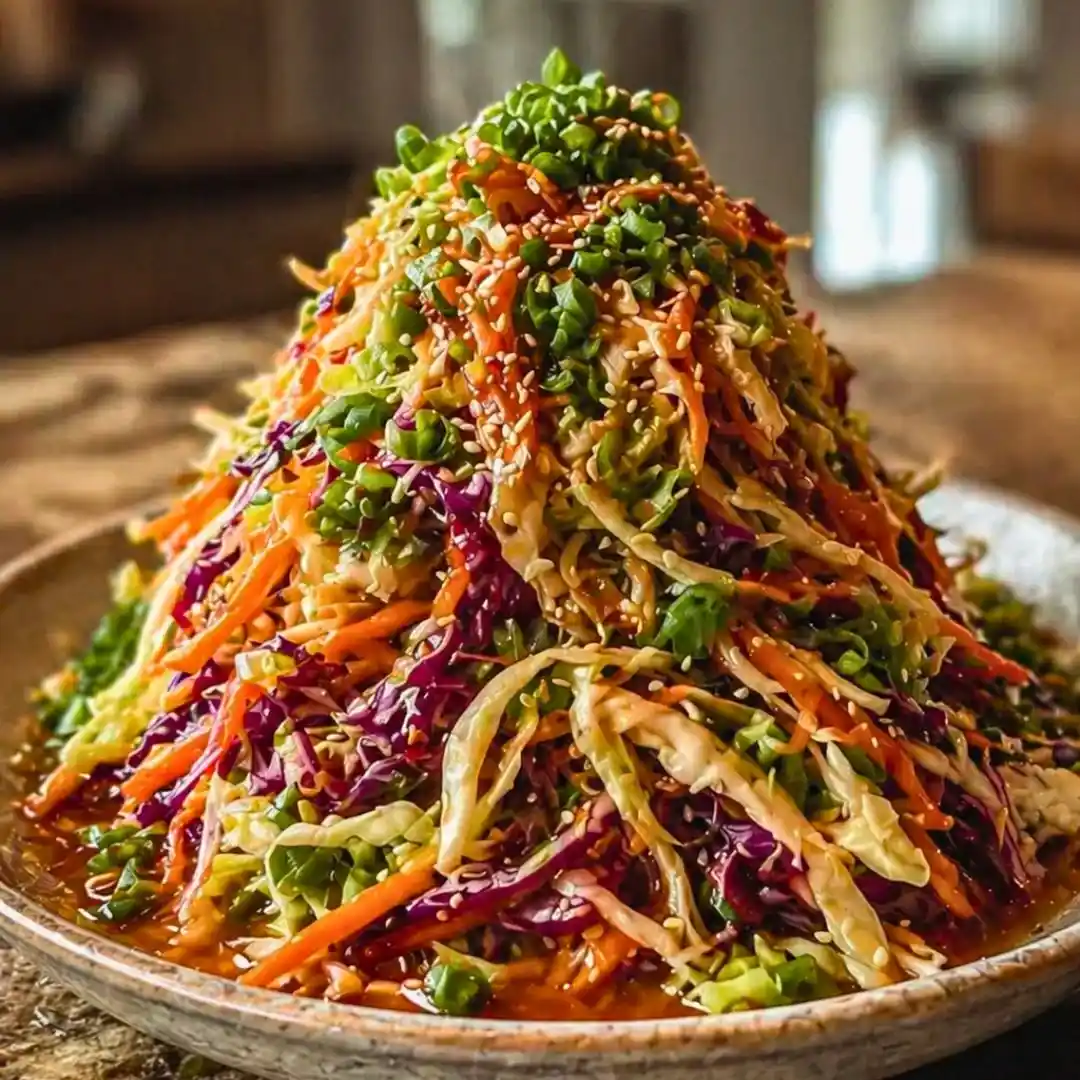
This crunchy Asian cabbage slaw with addictive sesame dressing is a vibrant, refreshing side dish that transforms simple vegetables into an irresistible complement to any meal. The combination of shredded green and purple cabbage, grated carrots, and crisp bell peppers delivers satisfying texture and visual appeal. A tangy-savory sesame dressing infused with garlic and ginger coats every strand, creating layers of flavor that improve as the slaw sits. This recipe serves as a versatile addition to grilled proteins, Asian noodles, or grain bowls.
| Prep Time | Cook Time | Total Time | Servings | Difficulty | Cuisine |
|---|---|---|---|---|---|
| 15 minutes | 0 minutes | 30 minutes (with rest) | 6-8 servings | Easy | Asian |
Why This Recipe Works
I discovered this Asian cabbage slaw formula while seeking a make-ahead side dish that stayed crisp and flavorful for days. The shredded cabbage base absorbs the sesame dressing without becoming soggy because the high acid content in rice vinegar prevents water absorption while tenderizing the vegetables slightly. The combination of raw and toasted sesame seeds provides textural contrast that keeps each bite interesting and satisfying.
The dressing itself is the star of this dish. Sesame oil delivers a deep, toasted aroma that reminds diners of their favorite Asian restaurants, while the ratio of vinegar to soy sauce balances acidity with umami perfectly. Fresh garlic and ginger brighten the flavor profile without overpowering the delicate vegetable base. This slaw works because every component plays a specific role: the cabbage provides structure, the dressing provides flavor, and the toppings provide textural surprise.
What makes this recipe truly addictive is the resting period. After just fifteen minutes at room temperature, the vegetables begin to wilt slightly and absorb the dressing evenly. The flavors meld together, intensifying the sesame-forward taste that keeps people reaching for seconds. Even cold from the refrigerator, this slaw maintains its crunch and tangy-savory appeal.
Ingredients
| Ingredient | Quantity | Notes & Alternatives |
|---|---|---|
| Green cabbage, finely shredded | 1 small head | Use a mandoline for uniform thickness. Napa cabbage adds sweetness but reduces crunch. |
| Purple cabbage, finely shredded | 1 small head | Provides color and anthocyanin antioxidants. Red cabbage works identically. |
| Carrots, grated | 2 medium | Daikon radish adds peppery notes; jicama increases sweetness slightly. |
| Red bell pepper, thinly sliced | 1 large | Orange or yellow peppers offer milder sweetness. Jalapeño adds heat. |
| Green onions, chopped | 3 stalks | Use both white and green parts for optimal onion flavor and visual appeal. |
| Cilantro leaves, chopped | 1/2 cup | Parsley provides similar freshness without cilantro’s polarizing taste. Mint works in warm climates. |
| Sesame seeds, toasted | 1/4 cup | Toast in a dry skillet until fragrant for maximum flavor. White or black seeds both work. |
| Rice vinegar | 1/2 cup | Rice wine vinegar provides gentle acidity. Apple cider vinegar intensifies sourness slightly. |
| Soy sauce | 1/3 cup | Tamari offers gluten-free alternative with similar umami depth and sodium content. |
| Sesame oil | 1 tablespoon | Use toasted, not light sesame oil. This ingredient is essential for authentic Asian flavor. |
| Sugar | 2 teaspoons | Balances acidity and salt. Agave nectar or honey work as 1:1 substitutes. |
| Garlic, minced | 1 teaspoon | Fresh garlic is essential. Garlic powder lacks the brightness of fresh minced garlic. |
| Fresh ginger, minced | 1 teaspoon | Peel before mincing to reduce fibrous texture. Ginger powder cannot replace fresh ginger here. |
| Salt and pepper | To taste | Start conservatively as soy sauce already contains significant sodium. Adjust after resting. |
Step-by-Step Instructions
Prepare the Vegetables
- Shred the green cabbage finely using a chef’s knife or mandoline, removing any tough outer leaves first.
- Shred the purple cabbage using the same method, keeping separate from the green cabbage initially.
- Grate the two carrots using a box grater or food processor, collecting any liquid that accumulates.
- Slice the red bell pepper thinly into matchstick pieces, removing seeds and white pith completely.
- Chop the green onions into 1/4-inch pieces, separating white bases from green tops for even distribution.
- Chop the cilantro leaves roughly, discarding thick stems and keeping leaves loosely packed.
Combine the Slaw Base
- Combine the shredded green cabbage, shredded purple cabbage, grated carrots, sliced red bell pepper, chopped green onions, and cilantro in a large mixing bowl.
- Toss the vegetables gently using two spoons or salad tongs, being careful not to crush the delicate cabbage strands or damage the pepper pieces.
- Distribute all vegetables evenly throughout the bowl to ensure balanced flavor in each serving.
Make the Sesame Dressing
- Whisk the rice vinegar, soy sauce, sesame oil, sugar, minced garlic, and minced ginger together in a separate medium bowl.
- Stir until the sugar dissolves completely, about 30 seconds of continuous whisking.
- Taste the dressing and adjust seasonings: add more soy sauce for deeper umami, more vinegar for increased tang, or more sugar to balance acidity.
- Season with salt and pepper carefully, remembering that soy sauce already provides significant sodium.
Combine and Rest
- Pour the prepared sesame dressing directly over the vegetable mixture in the large bowl.
- Toss the slaw thoroughly to coat every vegetable strand with dressing, using two spoons to lift and turn the slaw repeatedly.
- Allow the slaw to rest at room temperature for at least fifteen minutes, during which time vegetables will begin absorbing the dressing.
- Taste after fifteen minutes and adjust seasonings again if needed, as flavors develop and intensify during rest.
Finish and Serve
- Toast the sesame seeds in a dry skillet over medium heat for two minutes, shaking frequently until fragrant and light golden.
- Sprinkle the toasted sesame seeds evenly over the surface of the slaw just before serving.
- Transfer to serving bowls or a larger platter, using tongs to lift the slaw gently and maintain texture.
Chef Tips for Perfect Results
- Shred vegetables uniformly using a mandoline slicer, which ensures consistent texture and appearance while dramatically reducing prep time compared to hand-shredding.
- Toast sesame seeds immediately before serving rather than hours ahead, as toasted seeds lose their fragrant aroma and become stale when exposed to air.
- Reserve the slaw without sesame seeds for up to three days in the refrigerator, adding fresh toasted seeds just before serving for maximum crunch and flavor.
- Mince ginger and garlic fresh, never substituting powders, as the pungent compounds in fresh aromatics create the signature bright flavor that defines this dish.
- Taste the dressing before pouring it over vegetables, adjusting acidity and saltiness to your preference since palates vary and vegetables absorb seasoning differently.
- Use a box grater’s smallest holes for ginger to minimize fibrous texture, or consider using a microplane zester for ultra-fine, silky ginger pieces.
Common Mistakes to Avoid
Using light sesame oil instead of toasted sesame oil. Light sesame oil provides almost no flavor, creating a bland dressing that lacks the distinctive Asian restaurant taste that makes this slaw addictive. Toasted sesame oil has a deep, nutty aroma and darker color. Always purchase toasted sesame oil from the Asian section of your grocery store, confirming the label states “toasted” or “dark.”
Skipping the resting period or cutting it too short. The vegetables need at least fifteen minutes to absorb dressing and soften slightly, which develops the full flavor profile. Serving immediately after tossing results in crisp but underseasoned slaw with separated dressing pooling at the bottom. Set a timer for exactly fifteen minutes, then taste and adjust seasonings before serving.
Adding sesame seeds too far in advance. Sesame seeds soften and lose their distinctive crunch within two hours of sitting in the moist slaw environment. The addictive appeal of this dish depends entirely on crispy toasted sesame seeds providing textural contrast. Toast seeds fresh and add them within five minutes of serving for maximum impact.
Over-crushing vegetables when tossing. Aggressive tossing breaks down the cabbage structure, releasing water and creating a mushy texture similar to coleslaw. Use gentle two-spoon tosses to combine, lifting vegetables from the bottom of the bowl and turning them over lightly.
Neglecting to adjust seasoning after resting. Flavors concentrate as vegetables release water and dressing is absorbed, sometimes making the slaw saltier or more intense than initial tasting suggested. Always taste again after the fifteen-minute rest and add additional vinegar or water if needed to restore balance.
Variations and Substitutions
| Ingredient | Substitution | Impact on Flavor |
|---|---|---|
| Red bell pepper | Julienned cucumber or sliced radish | Cucumber adds watery crunch and mild sweetness; radish adds peppery bite and firmer texture. |
| Cilantro | Fresh mint or Italian parsley | Mint creates cooling sensation and sweetness; parsley adds earthy freshness without polarizing taste. |
| Sesame oil | Peanut oil with 1/2 teaspoon sesame extract | Peanut oil lacks sesame aroma; sesame extract restores umami but cannot fully replace sesame oil’s depth. |
| Rice vinegar | Apple cider vinegar or champagne vinegar | Apple cider adds sharper tang and slight apple notes; champagne vinegar creates lighter, more delicate acidity. |
| Soy sauce | Tamari or liquid coconut aminos | Tamari provides identical flavor with gluten-free certification; coconut aminos offer lower sodium but less umami depth. |
| Fresh ginger | Crystallized ginger or ginger paste | Crystallized ginger adds sweetness and softens over time; ginger paste offers consistent flavor but less bright heat. |
| Garlic | Shallots or garlic scapes | Shallots add onion sweetness and reduced pungency; garlic scapes provide milder garlic flavor and slight vegetable texture. |
| Carrots | Daikon radish or jicama | Daikon adds peppery spice and firmer crunch; jicama increases subtle sweetness and creates lighter appearance. |
Serving Suggestions and Pairings
Serve this crunchy Asian cabbage slaw alongside grilled chicken breast or salmon fillets for a light summer dinner that balances rich proteins with refreshing vegetables. The sesame dressing complements Asian-inspired grains perfectly, particularly alongside fried rice with mushrooms and eggs or sesame noodles. This slaw works beautifully as a taco topping for pulled chicken or seared tofu, adding textural contrast and Asian-forward flavor to Mexican-inspired meals.
Serve the slaw chilled alongside Vietnamese spring rolls for an authentic Asian appetizer experience, or offer it as part of a potluck spread where it maintains its texture and flavor for several hours without refrigeration. The fresh, crunchy texture makes it an ideal side dish for grilled Asian-marinated meats at summer barbecues. For meal prep purposes, divide into individual containers and store dressing separately, assembling just before eating to preserve crunch.
This slaw pairs beautifully with curry dishes, particularly mild to medium-heat curries where the cooling crunch balances spice. Serve alongside grilled Asian eggplant or roasted bok choy for a completely vegetarian Asian-themed dinner. The sesame dressing makes this slaw an ideal complement to miso soup with tofu and vegetables served as a light lunch or dinner starter.
Storage and Reheating
| Method | Duration | Instructions |
|---|---|---|
| Refrigerator (with dressing) | Up to 2 days | Store in an airtight container; slaw will continue softening as vegetables absorb additional dressing. Sesame seeds should be added fresh just before serving. |
| Refrigerator (undressed) | Up to 5 days | Store shredded vegetables and dressing separately in airtight containers. Combine and rest 15 minutes when ready to serve for crisp texture. |
| Freezer | Not recommended | Cabbage becomes mushy and loses texture completely when frozen; freezing destroys the crispy appeal that defines this slaw. |
| Room temperature | Up to 4 hours | Slaw can sit at room temperature during a meal or gathering without significant texture degradation, though vegetables will continue softening gradually. |
| Reheating | Not applicable | This is a cold side dish that should never be heated; serving cold or at room temperature maintains the desired crispy texture. |
Nutritional Information
| Nutrient | Amount per Serving |
|---|---|
| Calories | 145 |
| Protein | 4g |
| Total Fat | 9g |
| Saturated Fat | 1.2g |
| Carbohydrates | 14g |
| Dietary Fiber | 2.8g |
| Sugar | 5g |
| Sodium | 680mg |
| Approximate values based on 7 servings; values vary based on specific brands and preparation method. | |
Frequently Asked Questions
Can I make this crunchy Asian cabbage slaw ahead of time?
Yes, prepare the slaw up to five days in advance by storing shredded vegetables and dressing in separate containers in the refrigerator. The vegetables maintain maximum crunch when stored separately and combined just before serving. Add fresh toasted sesame seeds within five minutes of serving for optimal texture and flavor.
What is the best substitute for sesame oil in Asian cabbage slaw?
No true substitute exists for toasted sesame oil’s distinctive nutty flavor and aroma, but peanut oil combined with 1/2 teaspoon of sesame extract comes closest. The extract restores some umami depth, though the result lacks the full complexity of authentic sesame oil. Purchase toasted sesame oil specifically, as light sesame oil provides virtually no flavor.
How do I keep the Asian cabbage slaw crispy and crunchy?
Store shredded vegetables separately from dressing in airtight containers, combining them only when ready to serve or eat. Never add sesame seeds more than five minutes before serving, as they absorb moisture and soften quickly. Avoid over-stirring or crushing vegetables when combining, which breaks down cell structure and releases excess water.
Can I use regular vinegar instead of rice vinegar in this recipe?
You can substitute apple cider vinegar or champagne vinegar at a one-to-one ratio, though the flavor profile will shift slightly. Apple cider vinegar creates sharper tang with subtle apple notes, while champagne vinegar produces a more delicate, refined acidity. Distilled white vinegar works but produces a harsher, less nuanced flavor that overshadows the sesame dressing’s complexity.
Does crunchy Asian cabbage slaw taste better the next day?
The flavors intensify and meld together after resting, creating a more developed taste after four to six hours or the next day. However, the prized crispy texture softens gradually as vegetables absorb dressing over time. If you prioritize fresh crunch, serve immediately after the initial fifteen-minute rest; if you prefer developed flavor, store separately and recombine the morning after.
Conclusion
This crunchy Asian cabbage slaw with addictive sesame dressing transforms simple vegetables into an irresistible side dish through layered flavors and textural contrast. The combination of fresh, crisp vegetables with tangy-savory sesame dressing creates a versatile complement to grilled proteins, Asian grains, and festive meal spreads. Prepare this recipe ahead for easy entertaining, and watch as guests return for second servings of the toasted sesame seeds and vibrant cabbage slaw.
The signature flavor of this slaw comes from the interplay between acidic rice vinegar, deep umami from soy sauce, and the distinctive toasted sesame aroma. Master this recipe and you’ll have a reliable side dish that works across seasons and dining occasions.
PrintCrunchy Asian Cabbage Slaw with Addictive Sesame Dressing
A vibrant, refreshing Asian-inspired cabbage slaw with tangy-savory sesame dressing. Loaded with textures from cabbage, carrots, and bell peppers, this versatile side dish complements grilled proteins, noodles, or grain bowls.
- Prep Time: 15
- Total Time: 30
- Yield: 6-8 servings
- Category: Easy Lunch Ideas
- Method: Tossing
- Cuisine: Asian
- Diet: Vegetarian
Ingredients
Green cabbage, finely shredded
1 small head
Purple cabbage, finely shredded
1 small head
Carrots, grated
2 medium
Bell pepper, thinly sliced (any color)
2
Toasted sesame seeds (white and black), divided
2 tablespoons
Rice vinegar
3 tablespoons
Soy sauce (low sodium preferred)
2 tablespoons
Sesame oil
1 tablespoon
Garlic, minced
1 clove
Ginger, grated
1 teaspoon
Honey or maple syrup
1 teaspoon
Salt, to taste
Black pepper, to taste
Scallions, sliced (optional topping)
1 tablespoon
Red chili flakes (optional topping)
1 teaspoon
Instructions
Shred cabbages using a mandoline for uniform texture
Grate carrots and slice bell pepper into thin strips
In a large bowl, combine cabbage, carrots, and bell pepper
Add 1 tablespoon sesame seeds
In a separate small bowl, whisk together rice vinegar, soy sauce, sesame oil, garlic, ginger, honey, salt, and pepper
Pour dressing over slaw and toss to coat evenly
Let rest at room temperature for 15 minutes for flavors to meld
Top with remaining sesame seeds, scallions, and chili flakes before serving
Notes
Napa cabbage adds sweetness but slightly reduces crunch
Daikon radish can substitute carrots for a peppery note
Slaw keeps refrigerated for 2-3 days; flavor intensifies over time
Nutrition
- Serving Size: 1 cup
- Calories: 135
- Sugar: 5g
- Sodium: 150mg
- Fat: 10g
- Saturated Fat: 1.5g
- Carbohydrates: 8g
- Fiber: 3g
- Protein: 2g
- Cholesterol: 0mg