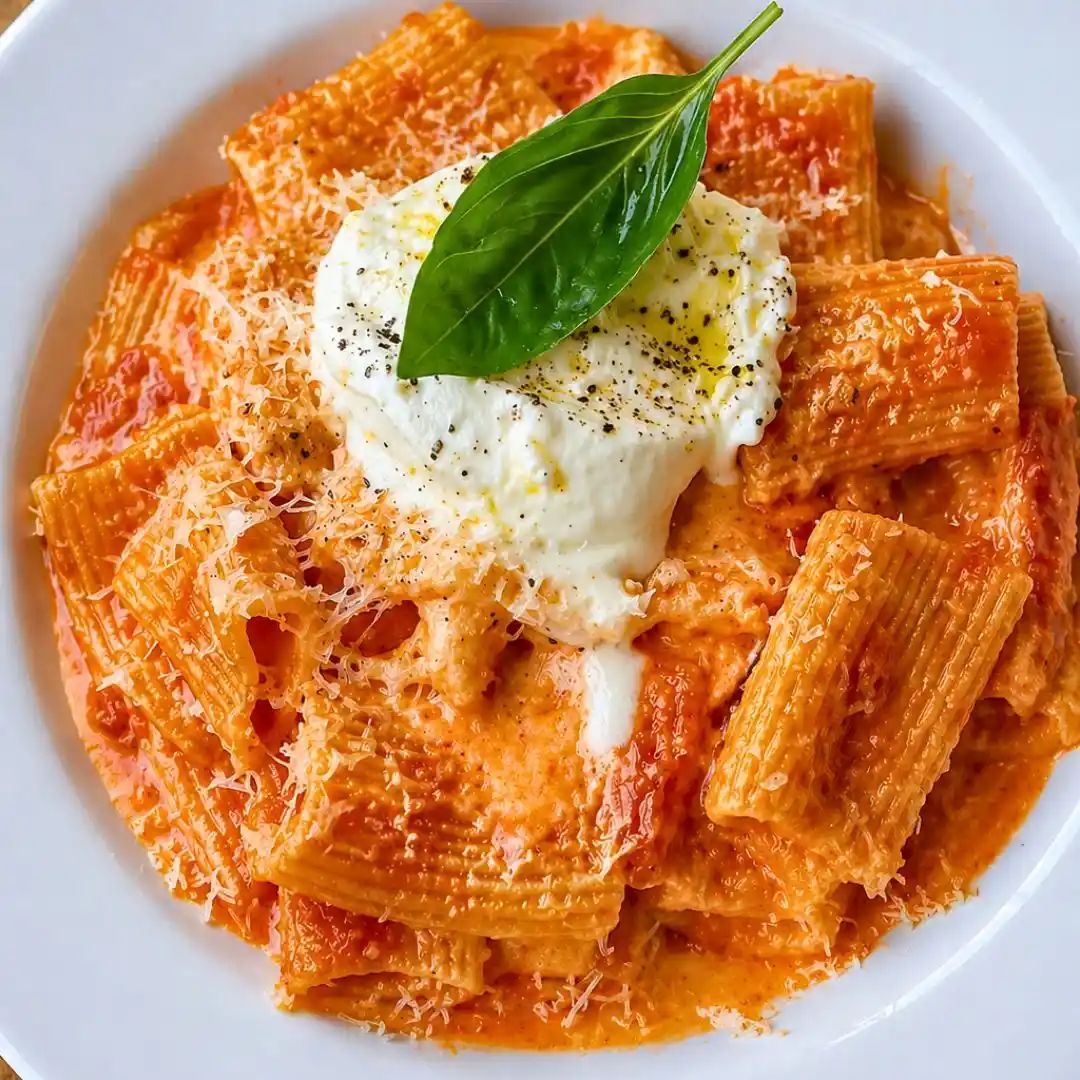
Roasted red pepper rigatoni with burrata is a vibrant Italian-inspired pasta dish that combines charred bell peppers, silky burrata cheese, and al dente rigatoni in a velvety tomato sauce. This restaurant-quality meal delivers fresh flavors and comes together in under 40 minutes. The combination of roasted peppers and creamy burrata creates an elegant dish perfect for weeknight dinners or entertaining guests.
| Prep Time | 10 minutes |
| Cook Time | 25 minutes |
| Total Time | 35 minutes |
| Servings | 4 servings |
| Difficulty | Easy to Intermediate |
| Cuisine | Italian |
Why This Recipe Works
This roasted red pepper pasta recipe transforms simple ingredients into something extraordinary through the char-roasting technique. When red bell peppers are exposed to direct flame, their natural sugars caramelize and their skins blister, creating deep, sweet notes that store-bought roasted peppers simply cannot replicate. I discovered this method years ago when testing charred vegetable preparations, and it fundamentally changed how I approach pepper-based sauces.
The magic happens when you blend the charred peppers with toasted garlic and whole peeled tomatoes. The blending process creates an incredibly silky sauce without any cream, making it lighter yet luxuriously smooth. The rigatoni’s ridged surface catches and holds this velvety sauce, ensuring every bite delivers maximum flavor. Undercooking the pasta by two minutes allows it to absorb sauce flavors while maintaining that critical al dente bite.
The burrata cheese is the finishing touch that elevates this dish from good to memorable. Its creamy center melts slightly when it meets the warm pasta, creating pockets of richness and cool freshness. This textural contrast between the warm sauce and cool burrata is what distinguishes restaurant-quality pasta from home cooking.
Ingredients
| Ingredient | Quantity | Notes and Alternatives |
|---|---|---|
| Red bell peppers | 2 large | Choose firm peppers with thin walls for even charring. Yellow peppers add sweetness but taste slightly different. |
| Garlic cloves | 5 cloves, crushed | Freshly crushed garlic develops better toasted flavor than pre-minced. Do not substitute with garlic powder. |
| Extra virgin olive oil | 6 tablespoons (divided) | Use quality olive oil for sautéing garlic and for finishing. This makes a noticeable difference in final flavor. |
| Rigatoni pasta | 1 pound | Short pasta shapes with ridges work best. Penne or mixed penne rigate are acceptable substitutes. |
| Kosher salt | 2 teaspoons for pasta water, plus to taste | Salt pasta water generously. The water should taste like the sea for proper pasta seasoning. |
| Black pepper | Pinch, plus to taste | Always freshly ground. Pre-ground pepper loses aromatics and makes a difference in final seasoning. |
| Whole peeled tomatoes | 14 ounces (1 can) | San Marzano tomatoes are preferred but any whole peeled tomatoes work well. Never use tomato sauce or paste here. |
| Pecorino Romano cheese | ½ cup grated (divided) | Sharper than Parmigiano-Reggiano with more pronounced salty notes. Freshly grate from a block. |
| Burrata cheese | 1 ball (8 ounces) | Keep refrigerated until serving. Purchase from specialty cheese shops or quality grocers for best quality and freshness. |
| Fresh basil | ¼ cup torn (plus sprigs for garnish) | Add basil at the end to preserve its bright, aromatic qualities. Cilantro is not a suitable replacement. |
Step-by-Step Instructions
Roasting and Preparing the Peppers
- Char the red bell peppers over an open flame on your stovetop. Hold each pepper with tongs over the flame, rotating every 30 seconds until the entire surface is blackened and blistered (approximately 8-10 minutes per pepper). Work carefully to avoid burns.
- Transfer the charred peppers immediately to a bowl and cover tightly with plastic wrap. This creates steam that loosens the blackened skin from the flesh underneath. Let them rest for 10 minutes undisturbed.
- Once cooled slightly, peel away the blackened skin by gently rubbing under cool running water. The skin should come off in large pieces with minimal effort if properly steamed.
- Cut the peeled peppers in half lengthwise and remove the seed pod and any remaining seeds. Discard seeds and core completely to avoid bitterness. Slice cleaned peppers into rough pieces.
Building the Sauce Base
- Sauté the crushed and peeled garlic cloves in 3 tablespoons of olive oil over medium heat. Cook for 3-4 minutes, stirring frequently, until the garlic turns golden brown and becomes fragrant. Do not let it blacken or the sauce will taste bitter.
- Add the roasted red pepper pieces and the entire can of whole peeled tomatoes with their juice to a blender. Pour in the toasted garlic and its oil mixture as well.
- Pulse the blender on medium speed for 45-60 seconds until the mixture reaches a smooth, velvety consistency. A few tiny pepper pieces are acceptable but aim for predominantly smooth texture.
- Pour the blended sauce into a large skillet set over medium-low heat. Simmer gently for 5 minutes to allow flavors to meld and the sauce to slightly thicken.
Cooking the Pasta
- Bring a large pot of water to a rolling boil and add 2 teaspoons of kosher salt. The water should taste seasoned like seawater before pasta enters.
- Add rigatoni to boiling water and cook for approximately 2 minutes less than the package-recommended time. For example, if the box says 11 minutes, cook for 9 minutes. Reserve 1 cup of pasta water before draining.
- Stir the drained rigatoni directly into the simmering sauce. Add ½ cup reserved pasta water to achieve the desired consistency. The starch in pasta water emulsifies with the oil and creates a silky coating.
- Simmer together for 2 minutes, stirring gently to coat all pasta evenly. Add more pasta water in small increments if the sauce seems too thick.
Seasoning and Finishing
- Season the pasta with ¼ cup of grated pecorino cheese, salt, and freshly cracked black pepper to taste. Stir well to incorporate.
- Tear approximately ¼ cup of fresh basil leaves and stir gently into the pasta. Tear rather than chop basil to avoid bruising and oxidation of delicate leaves.
- Divide the finished pasta among four warm serving bowls or plates, spooning sauce evenly into each portion.
- Top each serving with a quarter of the burrata ball, placing it in the center. Drizzle with remaining 3 tablespoons of olive oil around each portion.
- Finish with a small pinch of sea salt, fresh cracked black pepper, and a single basil sprig for garnish. Serve immediately while the pasta is hot and the burrata is still cool.
Chef Tips for Perfect Results
- Achieve proper char on peppers: Use a kitchen torch if you lack a gas stovetop. Hold the pepper steady with tongs and move the torch flame continuously for even, dark blistering. Electric stove owners can use a cast iron skillet directly over the burner set to high heat.
- Toast garlic correctly: Medium heat is essential for garlic browning without burning. Brown garlic develops nutty, deeply savory notes that raw or undercooked garlic cannot provide. Watch carefully during the final minutes as browning accelerates quickly.
- Use reserved pasta water strategically: Pasta water contains starch that emulsifies with oil and creates a professional-quality sauce coating. Add it gradually in small amounts rather than all at once to control consistency and prevent oversaturation.
- Keep burrata cold until serving: Store burrata in its original packaging in the coldest part of your refrigerator. The temperature contrast between warm pasta and cool burrata is essential to the dish’s textural appeal and flavor balance.
- Don’t overwork the burrata: Place the burrata ball whole on top of each portion and let diners break it open themselves. Premixing burrata breaks apart its delicate structure and ruins presentation and the intended textural experience.
- Finish with quality olive oil: Use your best extra virgin olive oil for the final drizzle. This is where olive oil’s peppery, grassy, or fruity notes shine through and significantly impact the finished dish’s flavor profile.
Common Mistakes to Avoid
Skipping the pepper charring step
Using raw or oven-roasted peppers produces a different and inferior result compared to flame-charred peppers. The open flame creates a chemical reaction that develops complex burnt sugar notes and smokiness. Raw peppers taste bright but one-dimensional. Solve this by committing to the charring step regardless of time constraints, as it takes only 10 minutes and completely transforms the sauce’s depth.
Cooking pasta too long
Boiling rigatoni for the full package time before adding to sauce results in mushy, overcooked pasta that disintegrates into the sauce. The final 2-3 minutes of cooking occur in the sauce itself while absorbing flavors. Fix this by setting a timer for 2 minutes less than package recommendations and pulling a piece to test doneness at that mark.
Using improper garlic preparation
Pre-minced garlic from a jar or blender-processed garlic cloves oxidize quickly and develop harsh, chemical-tasting notes. Crushed garlic cloves maintain integrity and develop better toasted flavor. Always crush fresh garlic cloves by hand or with the flat of a knife blade just before cooking.
Overcooking or blackening the garlic
Garlic that turns completely black tastes bitter and ruins the entire sauce. Medium heat and frequent stirring prevent this common problem. If garlic begins turning very dark, immediately remove the pan from heat and proceed to the next step. Slightly pale golden brown garlic is better than slightly overdone.
Neglecting to reserve pasta water
Adding cooked pasta directly to sauce without starch-rich cooking water creates a dry, separated dish. The pasta water’s starch emulsifies with oil and creates silky sauce coating that clings to noodles. Always reserve at least 1 cup of pasta water before draining.
Variations and Substitutions
| Ingredient | Substitution | Impact on Flavor |
|---|---|---|
| Red bell peppers | Yellow or orange bell peppers | Increases sweetness and reduces the depth of charred notes. Creates a brighter, more summery version. |
| Burrata cheese | Fresh mozzarella or ricotta dollop | Less creamy center and milder flavor. Ricotta adds tanginess while mozzarella is more neutral. |
| Pecorino Romano | Parmigiano-Reggiano | Milder and slightly sweeter than Pecorino. Reduces the salty, sharp finish of the dish. |
| Basil | Oregano or parsley | Creates a more savory, Mediterranean herbaceous quality. Loses the fresh, peppery note basil provides. |
| Rigatoni | Penne, bucatini, or spaghetti | Thinner pastas absorb more sauce creating different texture. Tube pastas hold sauce inside while long pastas coat differently. |
| Extra virgin olive oil | Regular olive oil | Creates a more neutral finish without the peppery, fruity notes. Still acceptable but noticeably less complex. |
Serving Suggestions and Pairings
Serve roasted red pepper rigatoni with burrata as a light main course for elegant dinner parties or casual weeknight meals. This dish pairs beautifully with a simple arugula salad dressed with lemon vinaigrette, which cuts through the richness and provides fresh, peppery contrast. The bright acidity refreshes the palate between bites of creamy pasta.
For special occasions, precede this pasta with grilled focaccia with rosemary and sea salt to welcome guests. The bread’s crispy exterior and tender interior complement the smooth sauce perfectly. Follow the pasta course with a simple green salad and a small plate of aged cheeses to complete a traditional Italian-style meal.
Pair this dish with sparkling elderflower lemonade or Italian sparkling mineral water for non-alcoholic options that cleanse the palate. For special dinners, serve with chilled sparkling beverages that provide refreshing contrast to warm pasta. Coffee or herbal tea make appropriate after-dinner accompaniments following the meal.
This recipe works excellently for meal prep bowls when served at room temperature. Layer cooled pasta in containers, top with burrata just before serving, and pack basil separately. Perfect for work lunches or picnics during warm months.
Storage and Reheating
| Method | Duration | Instructions |
|---|---|---|
| Refrigerator (pasta and sauce) | Up to 3 days | Store pasta and sauce together in an airtight container. Keep burrata separate in its original packaging. Reheat gently on stovetop over low heat, adding pasta water if needed to restore sauce consistency. |
| Freezer (sauce only) | Up to 2 months | Freeze the roasted pepper sauce alone in an airtight container or freezer bag. Do not freeze cooked pasta as it becomes mushy upon thawing. Cook fresh pasta and reheat sauce before combining and serving. |
| Stovetop reheating | 3-5 minutes | Place leftover pasta in a skillet over medium-low heat. Add 2-3 tablespoons of pasta water and stir frequently until warmed through. Do not allow to boil or pasta will overcook further and become mushy. |
| Microwave reheating | 2-3 minutes | Place pasta in a microwave-safe bowl, add 1 tablespoon water, cover loosely, and heat on 50% power in 1-minute intervals. Stir between intervals. Add fresh burrata after reheating since microwaving will ruin its texture. |
| Room temperature serving | Serve within 2 hours | Cooled pasta works for summer meals and picnics. Allow sauce to cool before combining with pasta. Keep burrata refrigerated and add just before serving to maintain temperature contrast. |
Nutritional Information
Approximate values based on one serving (¼ recipe, approximately 1.5 cups with 2 ounces burrata):
| Nutrient | Amount per Serving |
|---|---|
| Calories | 520 |
| Protein | 18 grams |
| Fat | 22 grams |
| Carbohydrates | 62 grams |
| Dietary Fiber | 3 grams |
| Sugars | 8 grams |
| Sodium | 680 milligrams |
Frequently Asked Questions
Can I use jarred roasted red peppers instead of charring fresh ones?
Jarred roasted red peppers work in a time crunch but produce noticeably less complex sauce compared to flame-charred peppers you prepare fresh. The open flame creates caramelization and smoky depth that jarred versions lack due to their industrial roasting process. For best results, char fresh peppers yourself, but jarred peppers are acceptable for weeknight cooking when time is limited.
What does al dente pasta texture feel like when cooked correctly?
Al dente pasta should have a slight resistance when bitten, with a barely tender center and no chalky raw texture. Break apart a test piece at the minimum cooking time and bite through the center. Properly cooked pasta maintains distinct shape and structure throughout the sauce without becoming mushy or separating into pieces.
Why is my sauce separating and becoming greasy?
Sauce separation happens when insufficient starch or emulsification ingredients are present to bind oil and liquid together. Always use reserved pasta water, which contains essential starch that creates silky emulsified sauce. Additionally, never allow sauce to boil vigorously after adding pasta, as excessive heat breaks the emulsion and causes separation.
Can I prepare the roasted pepper sauce one day ahead?
Yes, prepare the roasted pepper sauce up to 2 days ahead and store in an airtight refrigerator container. Cook fresh rigatoni when you are ready to serve, then reheat sauce gently and combine them together. This advance preparation streamlines dinner prep on busy nights since the time-intensive charring step is already complete.
Is there a substitute for burrata cheese that provides similar creaminess?
Fresh ricotta or fresh mozzarella di bufala provide creamy texture similar to burrata but with different flavor profiles. Ricotta adds tanginess while mozzarella tastes more neutral and mild. Neither offers burrata’s exact creamy center texture, but both create pleasant coolness contrast against warm pasta when placed on top just before serving.
Conclusion
Roasted red pepper rigatoni with burrata delivers sophisticated flavors with accessible techniques that any home cook can master. The combination of charred peppers, creamy burrata, and silky tomato sauce creates a restaurant-quality dish that takes under 40 minutes from start to finish. This elegant pasta proves that simple, quality ingredients require no cream or complicated methods to impress. The finished dish’s balance of warm, cool, rich, and fresh elements makes it equally suitable for casual family dinners or special entertaining occasions. Master this recipe and discover how flame-charred peppers and good cheese transform simple pasta into something memorable.
PrintRoasted Red Pepper Rigatoni with Burrata
This vibrant Italian-inspired pasta combines charred red peppers, silky burrata, and al dente rigatoni in a velvety tomato sauce. Ready in 35 minutes, it offers restaurant-quality flavor with fresh, balanced textures and no added alcohol or pork products.
- Prep Time: 10
- Cook Time: 25
- Total Time: 35
- Yield: 4 servings 1x
- Category: Quick Dinner Recipes
- Method: Roasting and Stovetop
- Cuisine: Italian
- Diet: Vegetarian
Ingredients
4 red bell peppers, halved and seeded
2 cloves garlic, whole and peeled
1 can (28 oz) whole peeled tomatoes
2 tbsp olive oil
1/2 tsp red pepper flakes
1 tbsp chopped fresh thyme
Salt and black pepper to taste
12 oz rigatoni pasta
4 oz fresh burrata cheese
Optional: Freshly grated Parmesan for garnish
Instructions
Preheat oven to 475°F (245°C) and place halved peppers and whole garlic cloves on a baking sheet.
Roast for 20-25 minutes until peppers are blistered and softened.
Transfer roasted peppers and garlic to a blender. Add tomatoes, 1 tbsp olive oil, red pepper flakes, thyme, and 1/2 tsp salt. Blend until smooth.
Cook rigatoni pasta in salted boiling water until al dente (2 minutes less than package instructions). Reserve 1 cup pasta water.
Return pasta to pot, add sauce, and toss until well combined. Add pasta water as needed to create a loosened sauce.
Divide pasta among plates, top with burrata, and gently press to let cream meld into the dish. Garnish with Parmesan and additional thyme if using.
Notes
For smokier flavor, roast peppers over an open flame or grill.
Use a food processor for smoother sauce texture.
Reserve any remaining sauce for a quick soup base.
Nutrition
- Serving Size: 1 serving
- Calories: 490
- Sugar: 5g
- Sodium: 520mg
- Fat: 21g
- Saturated Fat: 6g
- Carbohydrates: 67g
- Fiber: 4g
- Protein: 20g
- Cholesterol: 85mg