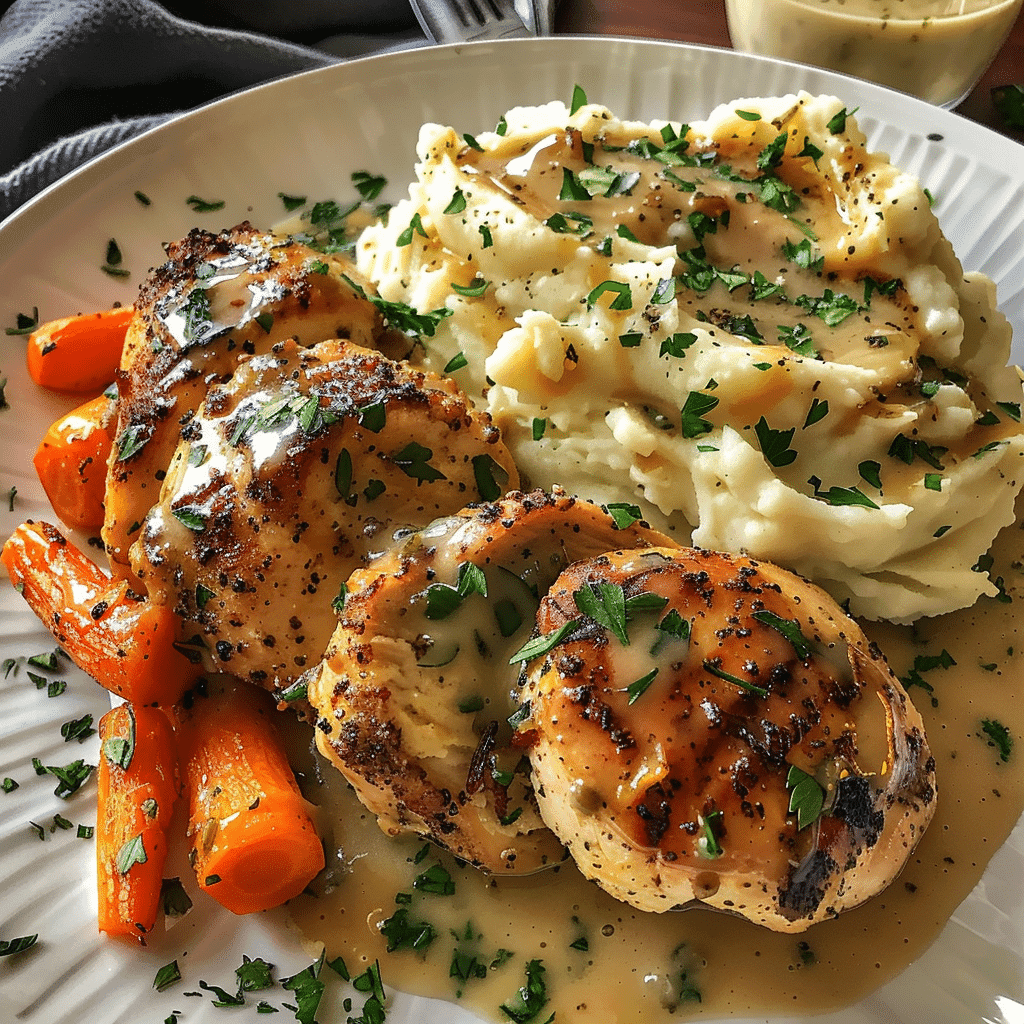
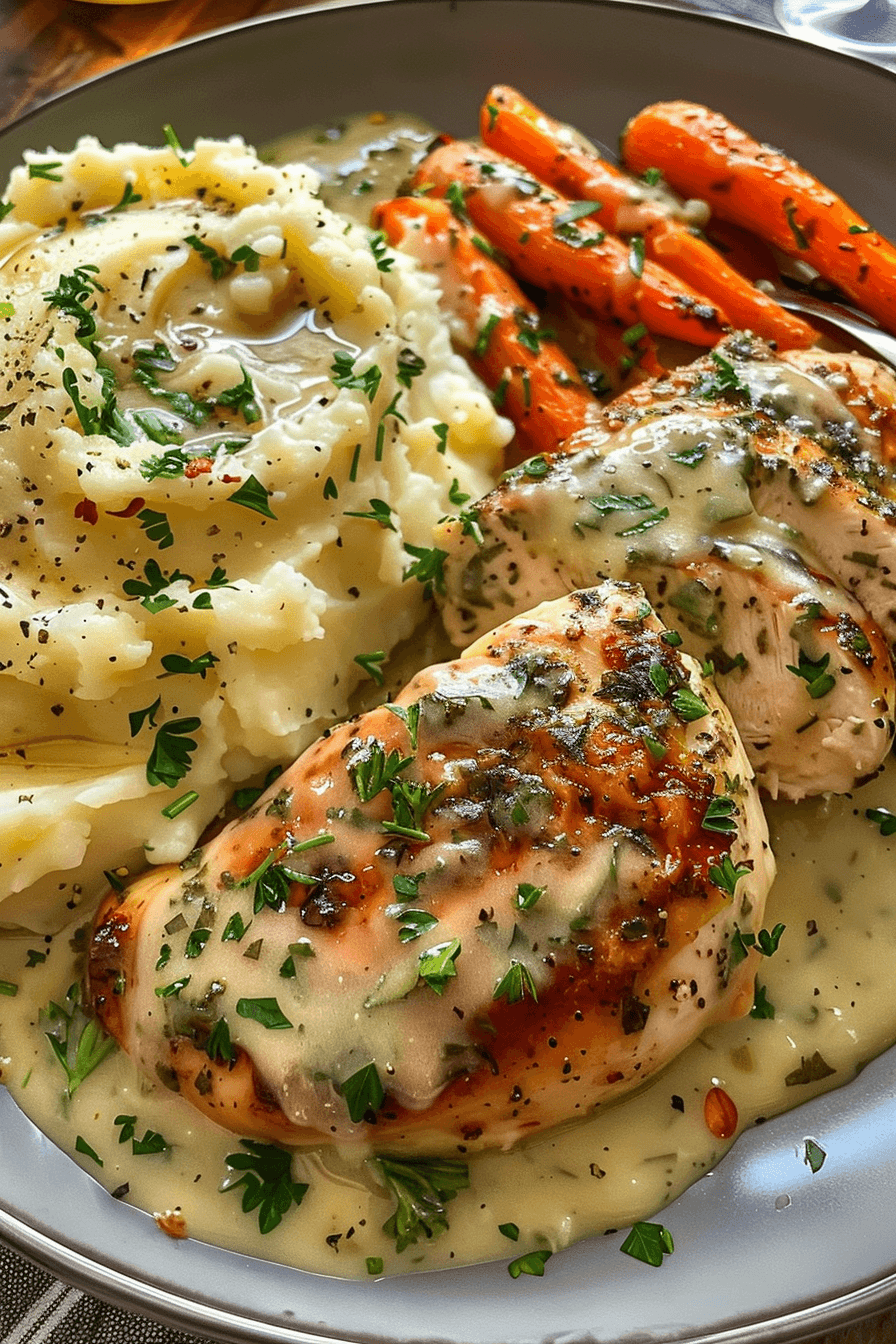
Creamy herb chicken with mashed potatoes and glazed carrots is a complete, restaurant-quality dinner that comes together in under an hour. This elegant main course features tender, seared chicken breasts bathed in a silky herb-infused cream sauce, paired with fluffy mashed potatoes and sweet, buttery glazed carrots. Every component works in harmony to create a satisfying, comforting meal that feels indulgent yet is entirely achievable at home.
| Detail | Value |
|---|---|
| Prep Time | 25 minutes |
| Cook Time | 35 minutes |
| Total Time | 60 minutes |
| Servings | 4 |
| Difficulty Level | Intermediate |
| Cuisine | French-Inspired, Contemporary |
Why This Recipe Works
This creamy herb chicken recipe delivers restaurant-quality results because it respects timing and technique at every stage. I sear the chicken first to develop a golden crust that adds depth to the finished dish, then gently finish it in the sauce to ensure it stays juicy and tender. The mashed potatoes cook simultaneously, so everything arrives at the table at the perfect temperature.
What makes this dish special is the balance between richness and brightness. The heavy cream and butter create a luxurious sauce, while fresh herbs, Dijon mustard, and lemon juice keep it from feeling heavy or one-dimensional. The glazed carrots add a sweet counterpoint that elevates the entire plate without requiring complicated techniques.
I’ve found that preparing components on a staggered timeline prevents overcooking and ensures optimal texture in every element. The potatoes boil while the chicken sears, the sauce comes together while carrots glaze, and everything finishes within minutes of each other. This approach means you’re plating a meal where nothing is sitting idle, getting cold or losing its texture.
Ingredients
| Ingredient | Quantity | Notes |
|---|---|---|
| Boneless, skinless chicken breasts | 4 (170–200 g each) | Tender protein that soaks up the herb-infused cream sauce. Pound if uneven. |
| Kosher salt, divided | 1 ½ tsp (or 1 tsp fine sea salt) | Balances and enhances flavors throughout the chicken and sides. |
| Freshly ground black pepper, divided | ¾ tsp | Adds gentle warmth and depth to both chicken and vegetables. |
| Garlic powder | ½ tsp | Boosts the savory undertones in the chicken seasoning. |
| Onion powder | ½ tsp | Lends a subtle sweetness and complexity to the poultry rub. |
| Olive oil | 2 tbsp | Creates a hot, nonstick surface for perfect chicken searing. |
| Unsalted butter, divided | 2 tbsp (plus 4 tbsp for potatoes, 2 tbsp for carrots) | Enriches both the sear on the chicken and the base of the sauce. |
| Garlic, finely minced | 3 cloves | Aromatic punch that flavors the sauce and chicken. |
| Shallot, finely minced | 1 small (or ¼ small onion) | Provides a tender, slightly sweet foundation for the sauce. |
| Dry white wine or low-sodium chicken broth | ½ cup | Deglazes the pan and adds bright acidity (use halal-certified broth if preferred). |
| Low-sodium chicken broth | 1 cup | Forms the savory backbone of the creamy sauce. |
| Heavy cream | 1 cup | Creates a silky, luxurious sauce texture. |
| Dijon mustard | 1 tsp | Offers a tangy kick and helps emulsify the sauce. |
| Fresh lemon juice (optional) | 1 tsp | Brightens flavor and lifts the cream sauce. |
| Fresh parsley, chopped | 1 tbsp | Adds fresh, herbaceous notes. |
| Fresh chives, chopped | 1 tbsp | Delivers mild oniony freshness. |
| Fresh thyme leaves | 1 tbsp (or 1 tsp dried) | Contributes earthy, woodsy flavor. |
| Fresh basil (optional) | 1 tbsp | Infuses a sweet, aromatic finish. |
| Freshly grated Parmesan cheese (optional) | ¼ cup | Melts in for extra depth and creaminess. |
| Yukon Gold or Russet potatoes, peeled and chunked | 900 g (about 2 lb) | Base for fluffy or buttery mashed potatoes. |
| Whole milk or half-and-half, warm | ½ to ¾ cup | Adjusts mash creaminess to your preference. |
| Sour cream or cream cheese (optional) | ¼ cup | Gives an extra tangy, velvety finish to the mash. |
| Carrots, peeled and sliced | 450–500 g (about 1 lb) | Sweet base for glossy glazed carrots. Slice ¼ inch thick. |
| Brown sugar or honey | 2 tbsp | Sweetens and caramelizes the carrots. |
| Water or orange juice | ¼ cup | Thins the glaze and steams the carrots. |
Step-by-Step Instructions
Prepare the Potatoes
- Place the peeled, chopped potatoes in a large pot and cover with cold water by about 2.5 cm (1 in). Stir in 1 ½ tsp kosher salt.
- Bring to a boil over medium-high heat, then reduce to a gentle boil and cook 15–20 minutes, until potatoes are very tender when pierced with a fork.
- While potatoes cook, start the chicken and carrots (steps below) to have everything ready at the same time.
- When tender, drain potatoes well and return them to the hot pot. Let them sit 1–2 minutes to steam off excess moisture.
Make the Mashed Potatoes
- Warm the milk (or half-and-half) in a small saucepan or microwave until just warm, not boiling.
- Add butter to the hot potatoes and mash with a potato masher or ricer until mostly smooth.
- Stir in ½ cup of the warm milk and the sour cream or cream cheese (if using).
- Season with ½ tsp salt and ¼ tsp pepper, then taste and adjust with more milk for creamier potatoes and more salt/pepper as needed.
- Cover the pot and keep warm on the lowest heat, or over a double boiler, stirring occasionally. Add chopped herbs just before serving if desired.
Season the Chicken
- Pat chicken breasts dry with paper towels for better browning.
- In a small bowl, mix 1 tsp kosher salt, ½ tsp black pepper, garlic powder, and onion powder.
- Sprinkle this mixture evenly over both sides of the chicken breasts and gently pat it in.
Sear the Chicken
- Heat a large skillet over medium-high heat. Add olive oil and 1 tbsp butter.
- When the fat is hot and shimmering, add the chicken breasts in a single layer without crowding (work in batches if necessary).
- Sear for about 4–5 minutes per side, until nicely golden and the internal temperature is around 68–70°C (155–160°F). They will finish cooking in the sauce.
- Transfer chicken to a plate and loosely cover with foil to rest while you make the sauce. Reduce heat to medium.
Start the Glazed Carrots
- In a medium skillet or saucepan, add the sliced carrots, 2 tbsp butter, brown sugar or honey, ¼ cup water or orange juice, salt, and pepper.
- Bring to a simmer over medium heat, stirring to coat carrots evenly.
- Cover and cook 6–8 minutes, stirring once or twice, until carrots are just tender but not mushy.
- Remove the lid and continue cooking 3–5 minutes, stirring often, until liquid reduces to a glossy glaze that coats the carrots.
- Stir in lemon juice if using, and taste for seasoning, adding a pinch more salt or sugar if desired. Keep warm on low heat. Garnish with parsley right before serving.
Make the Creamy Herb Sauce
- In the same skillet used for the chicken, reduce the heat to medium. Add the remaining 1 tbsp butter.
- Add minced shallot and cook 1–2 minutes until softened and translucent, scraping up browned bits from the pan.
- Add minced garlic and cook 30 seconds, just until fragrant, not browned.
- Pour in the white wine (or ½ cup chicken broth) and simmer 2–3 minutes, scraping the bottom of the pan, until reduced by about half.
- Stir in 1 cup chicken broth, heavy cream, Dijon mustard, and remaining ½ tsp black pepper. Simmer gently 4–6 minutes, stirring occasionally, until slightly thickened and velvety.
- If using Parmesan, stir it in now, allowing it to melt smoothly into the sauce.
- Turn heat to low, then add chopped parsley, chives, thyme, and basil (if using). Taste and adjust salt, pepper, or a splash of lemon juice to brighten the flavor.
Finish Cooking the Chicken in the Sauce
- Return the seared chicken breasts and any accumulated juices to the skillet, nestling them into the sauce.
- Spoon some sauce over each piece and simmer on low heat for 4–6 minutes, or until chicken reaches 74°C (165°F) in the thickest part.
- Turn off heat and let chicken rest in the sauce for 3–5 minutes to absorb flavor.
Plate the Dish
- Give the mashed potatoes a final stir. If they have thickened too much, add a splash of warm milk and adjust seasoning.
- Spoon a generous mound of mashed potatoes onto each plate.
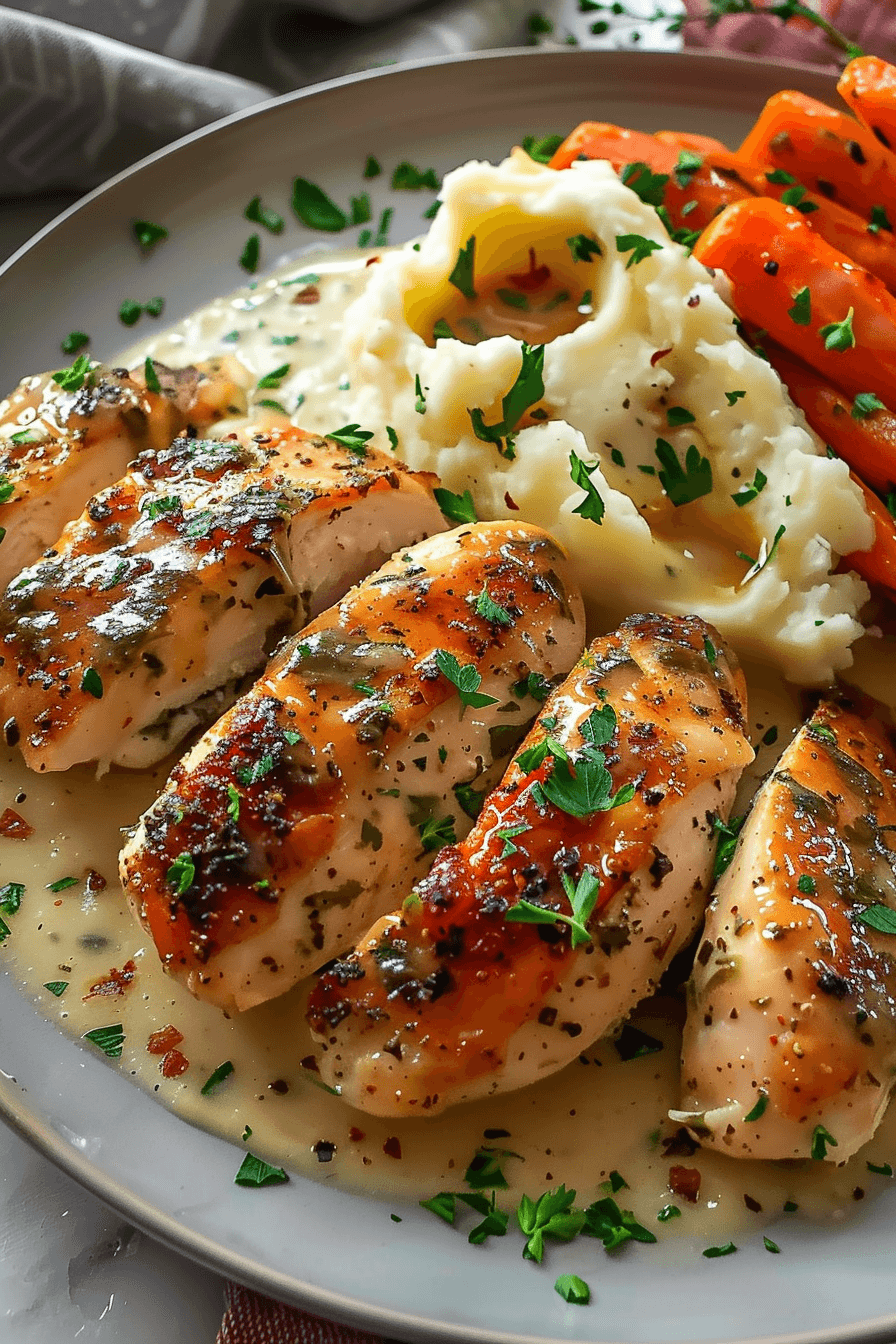
- Place a chicken breast next to or partially on top of the potatoes and ladle the creamy herb sauce over the chicken and a bit onto the potatoes.
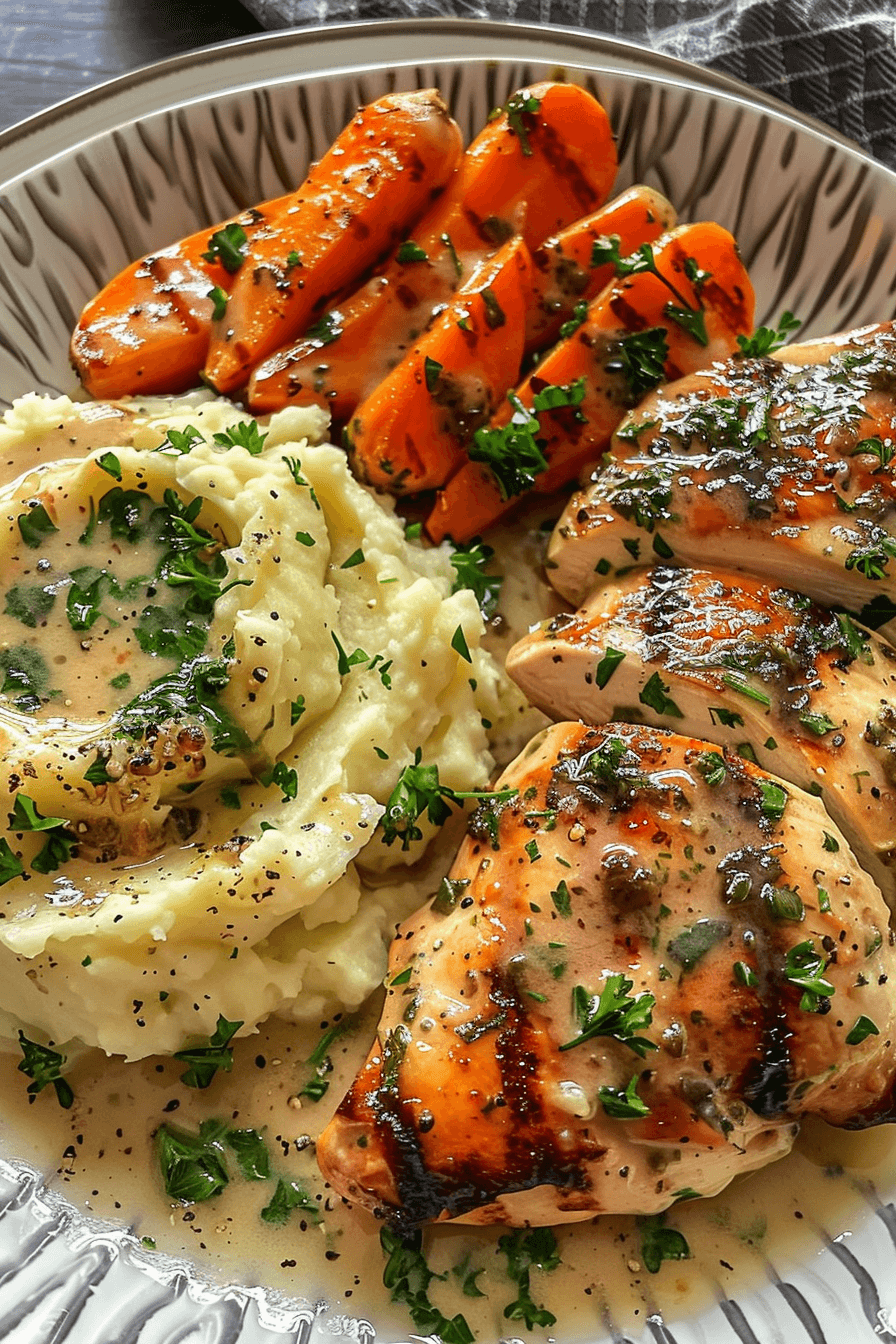
- Add a portion of glazed carrots to each plate, making sure they are nicely coated in glaze.
- Garnish with extra chopped herbs on the chicken and potatoes for a fresh, colorful finish.
Chef Tips for Perfect Results
- Pat chicken dry before seasoning to promote better browning and crust formation. Moisture is the enemy of a golden sear, so use paper towels liberally and press gently but firmly.
- Use a meat thermometer for precision. Sear chicken to 68–70°C (155–160°F) before adding to the sauce, then finish cooking to 74°C (165°F). This prevents overcooking and keeps meat incredibly tender.
- Scrape the pan bottom after searing chicken to release fond (browned bits) into the sauce. These caramelized particles add deep savory flavor that makes the entire dish more complex and restaurant-quality.
- Warm milk before adding to potatoes to maintain their fluffy texture. Cold milk can cause potatoes to become gluey or dense. Heat milk separately and fold gently using a ricer if available.
- Time the glazed carrots so they finish cooking just as you plate. Carrots lose their bright color and firm-tender texture if left sitting on heat, so remove them from the skillet and cover loosely with foil once glazed.
- Taste the herb sauce at every adjustment point. Start with minimal salt since both broth and cream can be salty. Add fresh lemon juice last to brighten flavors without overpowering the herbs.
Common Mistakes to Avoid
Overcooking the chicken is the most frequent mistake in this dish. Many cooks finish chicken to the safe internal temperature of 74°C (165°F) before making the sauce, leaving meat dry by the time it is plated. The fix is to sear chicken to 68–70°C (155–160°F) intentionally, so it finishes gently in the residual heat of the sauce and remains juicy and tender throughout.
Making the mashed potatoes too thick happens when cooks add insufficient milk or use cold dairy. Potatoes continue absorbing liquid as they sit, so start with less milk than you think necessary and add more gradually while tasting. If potatoes become too thick, a splash of hot milk whisked in immediately before plating solves the problem without making them watery.
Burning the garlic occurs when it is added to hot oil or butter without the shallot base. Garlic cooks in seconds and turns bitter if scorched, ruining the entire sauce. The solution is to cook shallot first for 1–2 minutes to soften it and cool the pan slightly, then add garlic for just 30 seconds until fragrant but not colored.
Oversalting the dish results from not tasting each component before serving. Both chicken broth and cream contain sodium, and salt from the vegetable cooking water accumulates. Taste the sauce before returning chicken to it, taste mashed potatoes before plating, and taste glazed carrots at the end so you can adjust salt precisely rather than discovering oversalting after serving.
Letting carrots overcook until mushy destroys the dish’s textural contrast. Glazed carrots should be tender but still possess slight resistance when bitten. Remove the cover after 6–8 minutes to check doneness, and shift to uncovered cooking to reduce liquid rather than extending cooking time, which ensures carrots stay firm-tender.
Variations and Substitutions
| Ingredient | Substitution | Impact on Flavor |
|---|---|---|
| Heavy cream | Half-and-half or crème fraîche | Lighter texture; crème fraîche adds subtle tang that brightens the herb profile. |
| Chicken breasts | Boneless, skinless thighs or chicken tenders | Thighs deliver richer, more forgiving meat with deeper poultry flavor. |
| Fresh herbs (thyme, chives, parsley, basil) | Tarragon, dill, oregano, or a combination of dried herbs | Tarragon brings subtle licorice notes; dill adds bright, fresh character; oregano increases earthiness. |
| Yukon Gold potatoes | Red potatoes, Russet, or Fingerlings | Red potatoes have waxy texture; Russets are fluffier; Fingerlings require less mashing for silkier texture. |
| Brown sugar | Honey, maple syrup, or white sugar | Honey adds floral sweetness; maple imparts woody notes; white sugar gives pure sweetness without depth. |
| White wine or chicken broth deglaze | Vegetable broth, additional chicken broth, or apple cider vinegar | Vegetable broth keeps sauce lighter; apple cider vinegar adds sharp brightness without alcohol. |
| Dijon mustard | Whole grain mustard or spicy brown mustard | Whole grain adds texture and rustic character; spicy brown delivers heat and deeper tang. |
| Parmesan cheese | Gruyère, Emmental, or aged white cheddar | Gruyère adds nutty, complex depth; Emmental brings subtle sweetness; white cheddar offers sharpness. |
Serving Suggestions and Pairings
Serve creamy herb chicken with mashed potatoes and glazed carrots as the centerpiece of an elegant dinner party or casual weeknight supper. The dish pairs beautifully with a simple arugula salad dressed with lemon vinaigrette to cut through the sauce’s richness and add peppery freshness.
For a refined occasion, accompany this plate with roasted asparagus or green beans on the side. The slight bitterness and crisp texture of these vegetables balances the creamy components while adding visual appeal. A crusty baguette or soft dinner rolls capture every drop of sauce.
This meal shines on autumn and winter tables when roasted root vegetables feel seasonally appropriate. Pair with a dry Riesling or Pinot Grigio if serving wine (these pair with the herb sauce and creamy components without overwhelming poultry).
For casual settings, serve alongside buttered corn on the cob, sautéed spinach, or roasted Brussels sprouts. The naturally sweet glazed carrots already present on the plate mean additional sides should lean toward savory or earthy rather than sweet.
Creamy herb chicken works equally well for date night, family dinner, or meal prep for the week. The components hold well when properly stored and reheat beautifully, making it an excellent choice for make-ahead dinner ideas when you need impressive results without last-minute stress.
Storage and Reheating
| Method | Duration | Instructions |
|---|---|---|
| Refrigerator Storage | 3–4 days | Store chicken and sauce together in an airtight container. Keep mashed potatoes and glazed carrots in separate containers. The sauce will thicken when cold; thin with a splash of broth when reheating. |
| Freezer Storage | Up to 2 months | Freeze chicken in sauce in an airtight, freezer-safe container. Mashed potatoes and carrots freeze separately for 1–2 months. Leave ½ inch headspace in containers for expansion. |
| Stovetop Reheating | 5–10 minutes | Place chicken and sauce in a skillet over medium-low heat. Stir occasionally and add 2–3 tbsp broth if sauce seems thick. Heat until chicken reaches 74°C (165°F). Reheat potatoes in a covered pot with a splash of milk, stirring frequently. Warm carrots in a skillet with a knob of butter. |
| Microwave Reheating | 3–5 minutes | Place chicken and sauce in a microwave-safe container. Cover loosely and heat at 50% power in 2-minute intervals, stirring between intervals. Add broth if needed. Microwave potatoes separately in a covered bowl with a splash of milk, stirring halfway through. Heat carrots briefly to refresh them. |
| Oven Reheating (Recommended) | 15–20 minutes | Preheat oven to 160°C (325°F). Place chicken and sauce in an oven-safe dish, cover with foil, and heat 15–20 minutes until warmed through. This method keeps sauce silky and chicken moist. Reheat potatoes and carrots separately or add them to the oven alongside the chicken in their own covered dishes. |
| Thawing Frozen Portions | Overnight | Move frozen containers to the refrigerator overnight to thaw completely. Never thaw at room temperature. Once thawed, reheat using stovetop or oven methods above, adding 2–3 tbsp additional broth to sauce if it has thickened significantly during freezing. |
Nutritional Information
Approximate values per serving (one chicken breast with sauce, one portion mashed potatoes, and one portion glazed carrots):
| Nutrient | Amount per Serving |
|---|---|
| Calories | 650–720 kcal |
| Protein | 42–48 g |
| Fat | 32–38 g |
| Carbohydrates | 48–56 g |
| Dietary Fiber | 3–5 g |
| Sugars | 12–15 g |
| Sodium | 780–950 mg |
| Cholesterol | 145–165 mg |
Frequently Asked Questions
Can I make creamy herb chicken without heavy cream?
Yes, you can substitute half-and-half or crème fraîche for heavy cream with excellent results. Half-and-half produces a slightly lighter sauce that is less rich but still silky and delicious. Crème fraîche adds subtle tang that brightens the herb flavors beautifully. Use the same quantity as heavy cream and follow the same cooking method. The sauce will be thinner, so simmer 1–2 minutes longer if you prefer more body.
How do I know when the chicken is done cooking?
Use a meat thermometer inserted into the thickest part of the chicken breast without touching bone. The safe internal temperature is 74°C (165°F). For this recipe specifically, sear chicken to 68–70°C (155–160°F) before adding it to the sauce, then finish it gently to 74°C (165°F) in the residual heat of the sauce. This technique prevents the meat from drying out while ensuring food safety.
What if my sauce breaks or becomes grainy?
A broken sauce happens when heavy cream cools rapidly or when you add acidic ingredients like lemon juice too quickly. To fix it, remove the skillet from heat and let it cool for 30 seconds. Whisk in 2–3 tablespoons of cold broth one tablespoon at a time until the sauce becomes smooth and silky again. If the sauce is grainy from Parmesan, you added cheese to sauce that was too hot, causing it to seize. Next time, reduce heat to low before adding cheese and stir constantly until it melts completely.
Can I make this dish ahead of time?
Yes, this is excellent for make-ahead dinners. Prepare all components separately up to 2 days in advance and store in airtight containers in the refrigerator. Sear the chicken but do not add it to the sauce yet. When ready to serve, reheat the sauce gently over medium-low heat, add the chicken to finish cooking, and warm the potatoes and carrots separately. This approach ensures everything tastes freshly made while saving significant time during service.
How do I serve this for meal prep?
Portion the chicken, sauce, mashed potatoes, and glazed carrots into individual containers, keeping each component separate to prevent the potatoes from absorbing too much sauce. Store in the refrigerator for up to 4 days. Reheat in the microwave or on the stovetop when ready to eat, adding a splash of broth to the sauce if it has thickened. This creates convenient grab-and-heat meals that taste homemade and restaurant-quality.
Conclusion
Creamy herb chicken with mashed potatoes and glazed carrots stands as an elegant yet approachable dinner that transforms basic ingredients into something special. The combination of tender seared chicken, silky herb-infused sauce, fluffy mashed potatoes, and sweet glazed carrots creates a complete, satisfying meal that impresses both family and guests. Master the timing technique, respect the temperature guidelines, and this restaurant-quality dish becomes a reliable favorite in your weeknight rotation.
PrintCreamy Herb Chicken with Mashed Potatoes and Glazed Carrots
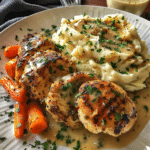
A restaurant-quality French-inspired dinner featuring seared chicken in a silky herb sauce, fluffy mashed potatoes, and sweet buttery glazed carrots. Balanced richness and brightness create an indulgent, comforting meal.
- Prep Time: 25
- Cook Time: 35
- Total Time: 60
- Yield: 4 servings 1x
- Category: Comfort Food Recipes
- Method: Sauté, bake, roast
- Cuisine: French-Inspired, Contemporary
- Diet: None
Ingredients
4 (6-ounce) chicken breasts
3 tablespoons butter
2 cloves garlic, minced
1 cup heavy cream
1 tablespoon fresh thyme leaves
1 tablespoon fresh parsley, chopped
1 teaspoon Dijon mustard
1 tablespoon lemon juice
1 lb Yukon Gold potatoes
2 tbsp butter
Salt and pepper
1 lb carrots
1 tbsp brown sugar
Instructions
Preheat oven to 375°F. Pat chicken dry and season both sides with salt and pepper
Melt 1 tbsp butter in an oven-safe skillet over medium-high heat. Sear chicken 3-4 minutes per side until golden. Set aside
In same skillet, sauté garlic 30 seconds. Add cream, thyme, parsley, mustard, and lemon juice. Simmer 5 minutes
While sauce simmers, boil peeled potatoes in salted water 15-18 minutes until tender. Drain, then mash with 2 tbsp butter
Toss peeled carrots with 1 tbsp butter, brown sugar, salt, and pepper. Roast 20-25 minutes until tender and caramelized
Reduce oven to 300°F. Return chicken to skillet with sauce, place over low heat. Return to oven 20-25 minutes until chicken reaches 165°F
Notes
For dairy-free alternative: Use full-fat coconut milk for sauce and vegan butter
Add more thyme or parsley for herb intensity
To prevent overcooking, prepare components on staggered timeline as outlined in text
Nutrition
- Serving Size: 1 serving
- Calories: 750
- Sugar: 9g
- Sodium: 480mg
- Fat: 45g
- Saturated Fat: 28g
- Carbohydrates: 45g
- Fiber: 6g
- Protein: 50g
- Cholesterol: 220mg